
Dematerialised (or Demat) shares, on the other hand, are electronic records that indicate ownership. Are you ready to take on the world of finance and make your money work for you? Before you do that, there’s one important step you need to take – completing your Know Your Customer (KYC) procedure.
Browse Financial Dictionary
Stockholders equity, fundamentally, represents a company”s net worth from the shareholders” perspective. It”s the portion of a company”s assets that belongs to the owners after all debts and obligations have been satisfied. Think of it as the financial cushion that protects creditors and indicates the true ownership stake that shareholders have in the business.
Why should you create and use statements of shareholders’ equity?

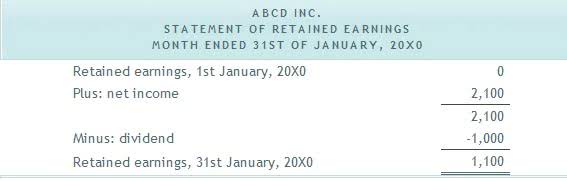
When you hear terms like “book value” or “net worth” in corporate finance, they”re referring to this same concept. Stockholders equity serves as a key indicator of financial health and stability, showing whether a stockholders equity formula company has built value over time or is potentially in financial distress. By comparing total equity to total assets belonging to a company, the shareholders equity ratio is thus a measure of the proportion of a company’s asset base financed via equity. A negative shareholders’ equity means that shareholders will have nothing left when assets are liquidated and used to pay all debts owed. Shareholders capital can be calculated in two ways one of them is the accounting equation and the other is summing up all the components of shareholders equity. Both the way of calculating the shareholders’ equity of a company will provide the same result.
What is Shareholder Equity Ratio?
- This article explains the features, benefits, and the definition of shareholders’ equity.
- This choice affects how resilient the business is during slowdowns and how safely it can grow over time.
- A company may keep its stocks in the treasury for using them in the future.
- In recent years, thematic funds have grown rapidly and become a buzzword in the investment world.
- The stock exchange is a system in which market players or traders purchase and sell equity shares.
This formula is known as the investor’s equation where you have to compute the share capital and then ascertain the retained earnings of the business. Analyzing stockholders equity trends over multiple years reveals important patterns about company performance and management effectiveness. Year-over-year comparisons show whether the company is building or destroying shareholder value through its operations and strategic decisions. Investors should look for consistent equity growth, stable equity levels during economic downturns, and reasonable explanations for any significant fluctuations. Corporations like to set a low par value because it represents their “legal capital,” which must remain invested in the company and cannot be distributed to shareholders. Another reason for setting a low par value is that when a company issues shares, it cannot sell them to investors at less than par value.
Benefits of a High D/E Ratio
Increased liabilities without corresponding asset increases also compress equity positions. What remains after deducting total liabilities from the total assets is the value that shareholders would get if the assets were liquidated and all debts were paid up. Shareholders’ equity can also be calculated Foreign Currency Translation by taking the company’s total assets less the total liabilities. The account demonstrates what the company did with its capital investments and profits earned during the period. Let us consider an example of a company PRQ Ltd to compute the Shareholder’s equity.
- Working capital, the purchase of fixed assets, or debt repayment are just a few uses for retained earnings.
- ROE may also provide insight into how the company management is using financing from equity to grow the business.
- So, to calculate the shareholders’ equity, you must deduct INR 8 crore from INR 10 crore.
- The sum of the company’s liabilities is the next component of the equation.
- They do so because they consider this kind of debt to be riskier than short-term debt, which must be repaid in one year or less and is often less expensive than long-term debt.
- Although a lot of investment choices are based on the amount of risk we are willing to face, we cannot ignore all the important factors mentioned above.
Drawbacks of Debt-to-Equity Ratio
The first is the money invested in the company through common or preferred shares and other investments made after the initial payment. The second is the retained earnings, which includes net earnings that have not been distributed to shareholders over the years. The stockholder’s equity can be calculated by deducting the total liabilities from the company’s total assets. In other words, the Shareholder’s equity formula finds the net value of a http://www.three60brands.com/2023/04/05/sales-tax-deduction-calculator-general-internal/ business or the amount that the shareholders can claim if the company’s assets are liquidated, and its debts are repaid. The shareholder equity ratio measures the percentage of a company’s total assets financed by shareholders’ equity instead of debt, reflecting its financial leverage and stability. This ratio helps you understand how much of a firm’s value is funded by owners versus creditors, providing insight into its capital structure.